Periodontics
Gum Disease Treatment in San Clemente
The condition most people have no idea they have until it is advanced.
Gum disease starts quietly – a little bleeding when you brush, gums that look puffier than they did. Caught at that stage it is reversible. Left alone it becomes periodontitis, and that costs teeth.
Dentistry for the whole household.
About Gum Disease
Catching it early is the whole game
Periodontal disease shows itself through plaque along the gumline, gums that are swollen or tender, bleeding when you brush or floss, and persistent bad breath. None of those are dramatic, which is exactly the problem. Addressing them promptly is what stops the disease progressing.
Treatment
How gum disease is treated
Treatment is matched to how far it has gone, and most cases never need the later stages.
- Professional cleaning Removing the plaque and tartar that drive the inflammation.
- Scaling and root planing Cleaning below the gumline where a routine clean cannot reach.
- Gum graft surgery In advanced cases, addressing recession and restoring the health of the gums.
- Gum recession therapy Treating the loss of gum tissue around the teeth.
Prevention
Keeping gums healthy
Prevention is consistent rather than complicated, and it is most of the battle.
- Daily oral hygiene Toothbrush, toothpaste, floss, mouthwash and interdental brushes all have a role.
- Brushing and flossing Twice a day and daily respectively – the first line of defense against gingivitis.
- Regular dental visits Check-ups and cleaning at least twice a year, so it is caught early.
- Lifestyle Avoiding smoking, a balanced diet and managing stress all support healthier gums.
Why It Matters
What untreated gum disease costs
Gum disease is not confined to the gums. Left to progress it causes recession, tooth loss and persistent bad breath, and the damage to the bone supporting the teeth does not come back on its own. Spotting the symptoms early and treating them is what prevents all of that – which is why the routine appointment matters more than it feels like it does.
Getting Started
Having your gums assessed
If your gums bleed when you brush, that is worth an appointment rather than a wait-and-see. Talega Dental Group has treated families in San Clemente since 2003, and gum health is checked as part of every examination we do.

The short answer
Gum disease, or periodontal disease, is inflammation of the gums driven by plaque and tartar along the gumline, showing as swollen or tender gums, bleeding when you brush or floss and persistent bad breath. Caught early as gingivitis it is reversible, but left alone it becomes periodontitis, which damages the bone supporting the teeth and can lead to tooth loss. Treatment is matched to how far it has gone, from professional cleaning to scaling and root planing below the gumline and, in advanced cases, gum graft surgery.
Common Questions
Gum Disease FAQ
- How do I know if I have gum disease?
The common signs of gum disease are plaque along the gumline, swollen or tender gums, bleeding when you brush or floss, and persistent bad breath. None of these are dramatic, which is why it often goes unnoticed until it is advanced. An examination is what confirms it, and gum health is checked as part of every examination we do.
- Is bleeding when I brush normal?
No, bleeding when you brush is not normal. It is one of the earliest signs of gum inflammation. That early stage is also when treatment is simplest and most effective, so it is worth an appointment rather than a wait-and-see.
- Can gum disease be reversed?
Early gum disease can be reversed. Gingivitis, the early stage, responds to treatment and improved hygiene. Once it progresses to periodontitis, the damage to gum and bone is more serious, and the bone supporting the teeth does not come back on its own. That is why early detection matters.
- What is scaling and root planing?
Scaling and root planing is a deeper clean that treats below the gumline. It reaches plaque and tartar that have gone beyond what a routine cleaning can remove. Scaling clears that buildup, and root planing smooths the root surfaces so the gums can heal against them.
- Will I need surgery?
Most cases of gum disease are managed without surgery. It is needed only in more advanced cases, where gum graft surgery addresses recession and restores the health of the gums. Treatment is matched to how far the disease has gone, and most cases never need the later stages.
- How often should I be checked?
You should have check-ups and cleaning at least twice a year. Regular visits are what allow gum disease to be detected and treated early. Between visits, brushing twice a day and flossing daily are the first line of defense against gingivitis.
Book a visit
Plan your visit
We accept new patients and offer walk-in emergency care.
Address
Phone
Office hours
Your dentist

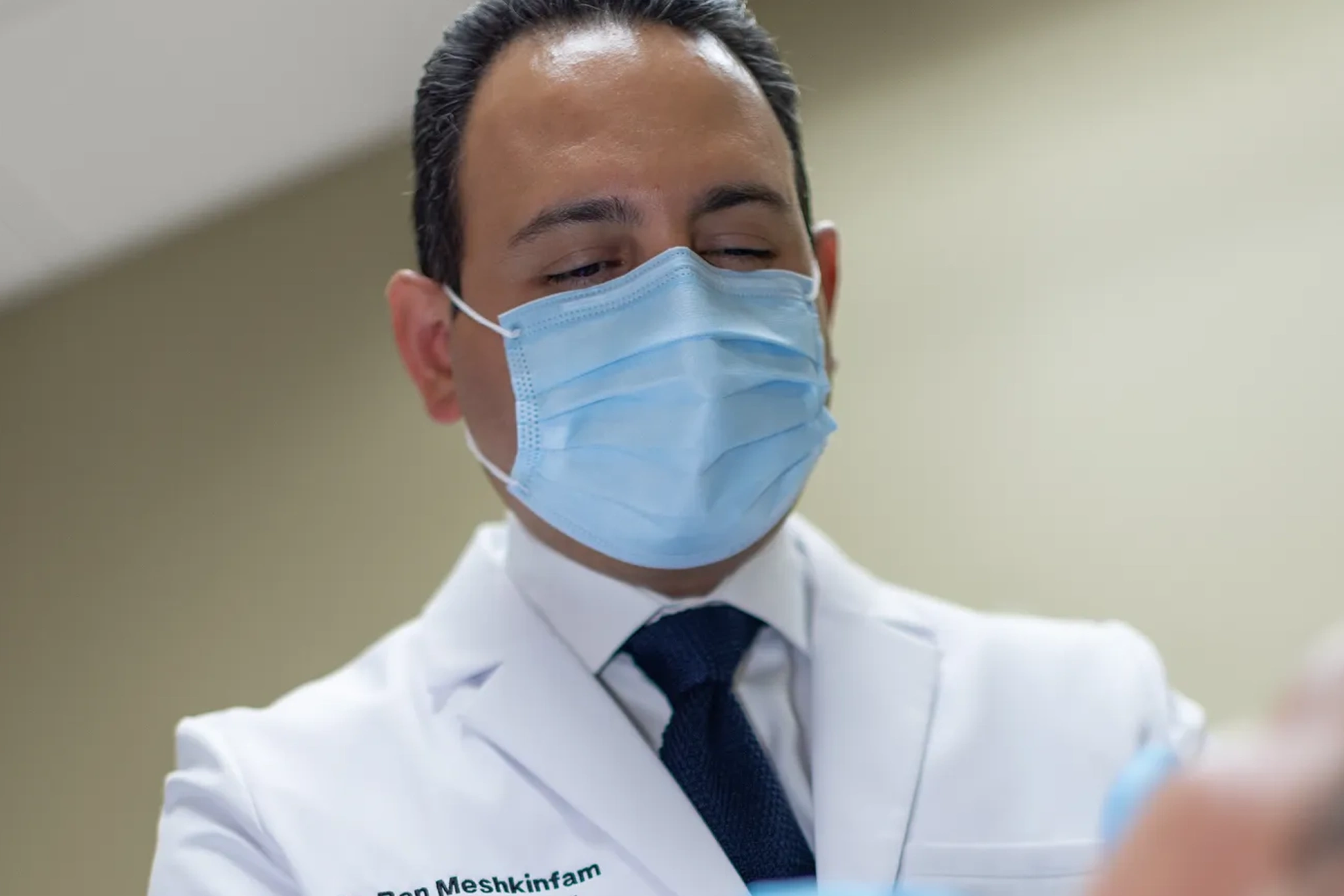
Dr. Ben Meshkinfam, D.D.S.
University of the Pacific, D.D.S. · Post-doctorate at LAC+USC Medical Center
Insurance & financing
30 HMO and PPO plans accepted
Including Delta Dental, Cigna, UnitedHealthcare, Aetna, Guardian, MetLife and Humana. Estimates in writing before treatment.