Restorative & Endodontics
Root Canals in San Clemente
The treatment that saves a tooth most people assume is already lost.
When decay, a crack or an injury lets bacteria reach the soft tissue inside a tooth, the result is severe pain and, untreated, the loss of the tooth. A root canal clears the infection and keeps the tooth in place.
Dentistry for the whole household.
About Root Canals
Treating the inside of the tooth
A root canal removes the infected or inflamed pulp – the soft tissue inside the tooth – then cleans, shapes and seals the canals so bacteria cannot return. It is carried out under local anesthetic, and the point of it is preservation: the natural tooth stays, rather than being extracted and replaced.
The Procedure
How a root canal is carried out
The appointment follows the same sequence each time, and you will know what stage you are at throughout.
- Anesthesia Local anesthetic numbs the tooth and the area around it.
- Pulp removal An access point is made and the infected or damaged pulp is removed from the canals.
- Cleaning and shaping The canals are cleaned, disinfected and shaped ready to be filled.
- Filling They are sealed with a biocompatible material, typically gutta-percha, to keep infection out.
- Restoration A crown or filling is placed over the tooth to restore function and protect it.
Why Treat It
What root canal treatment achieves
The reputation is worse than the reality. For most people the defining experience is that the pain stops.
- Pain relief It removes the source of a severe toothache rather than masking it.
- The tooth is kept Extraction is avoided and the natural tooth structure is preserved.
- Normal chewing The tooth works again, so eating returns to normal.
- Your smile is unchanged The natural appearance of the tooth is preserved.
- Infection is contained It stops the infection spreading to neighboring teeth and tissue.
Afterwards
What to expect after treatment
Some temporary soreness is normal once the anesthetic wears off, and it is typically mild and manageable with over-the-counter pain medication. The tooth then functions normally again, and the crown or filling placed over it restores both its strength and its appearance.
In Pain Now
If a tooth is hurting today
Severe or persistent tooth pain is not something to wait out, and it is one of the reasons we keep room for urgent appointments. Call and describe what you are feeling – we will tell you honestly whether it needs to be seen today.

The short answer
A root canal is a treatment that removes infected or inflamed pulp, the soft tissue inside a tooth, then cleans, shapes and seals the canals so bacteria cannot return. It is carried out under local anesthetic, and the tooth is then restored with a crown or filling. The purpose is to keep the natural tooth rather than extract and replace it.
Common Questions
Root Canal FAQ
- Is a root canal painful?
For most people, a root canal relieves pain rather than causing it. It is carried out under local anesthetic to minimize discomfort, and the severe ache comes from the infection that the treatment removes. Some temporary soreness is normal once the anesthetic wears off, and it is typically mild.
- Why not just take the tooth out?
A root canal preserves the natural tooth, which keeps your bite and your smile as they are. The tooth works again afterwards, so eating returns to normal. Extraction, by contrast, leaves a gap that then has to be managed in its own right.
- How will I know if I need one?
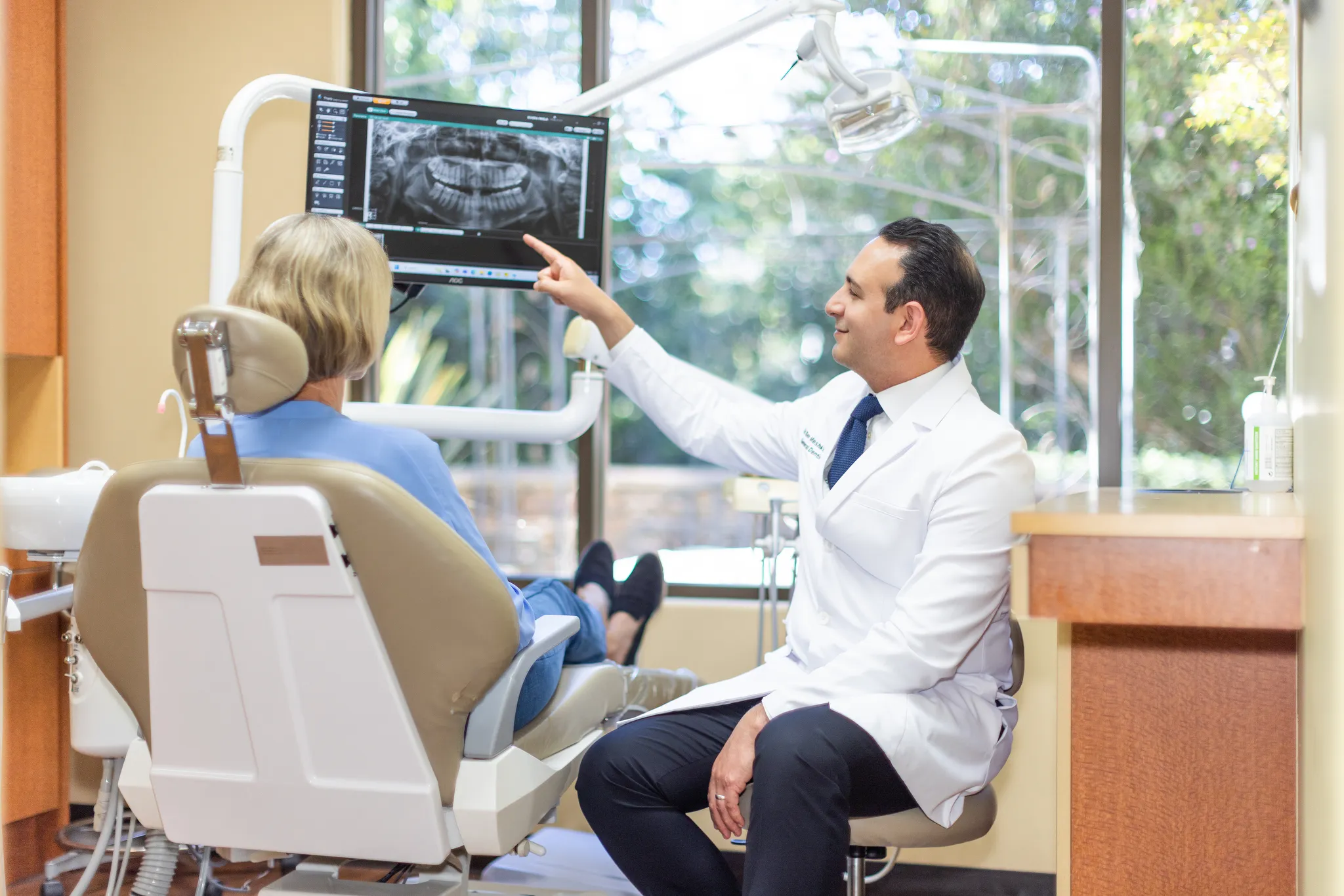
Severe pain is the usual signal, and an examination and X-ray are what confirm it. Deep decay, a cracked tooth or an injury can let bacteria reach the pulp, the soft tissue inside the tooth. Once that happens, the result is severe pain and, untreated, the loss of the tooth.
- Will the tooth need a crown afterwards?
A crown or a filling is placed over the treated tooth to restore its function and protect it from further damage. Which one is right depends on how much tooth structure is left. Either way, the restoration brings back both the tooth's strength and its appearance.
- How sore will I be afterwards?
Some temporary soreness is normal once the anesthetic wears off. It is typically mild and manageable with over-the-counter pain medication. The tooth then functions normally again. Tell us if the soreness is worse than that.
- How soon can I be seen?
Tooth pain is treated as urgent, and we keep room for urgent appointments. Call and describe the symptoms, and we will find you the earliest appointment we can. We will also tell you honestly whether it needs to be seen today.
Book a visit
Plan your visit
We accept new patients and offer walk-in emergency care.
Address
Phone
Office hours
Your dentist

Dr. Ben Meshkinfam, D.D.S.
University of the Pacific, D.D.S. · Post-doctorate at LAC+USC Medical Center
Insurance & financing
30 HMO and PPO plans accepted
Including Delta Dental, Cigna, UnitedHealthcare, Aetna, Guardian, MetLife and Humana. Estimates in writing before treatment.