Restorative Dentistry
Dental Implants in San Clemente
A replacement tooth anchored in the jaw, not resting on the gum.
An implant replaces the root of a missing tooth with a post that fuses to the jawbone. What sits on top – a crown, a bridge or a denture – is then anchored rather than removable, and the bite works the way it used to.
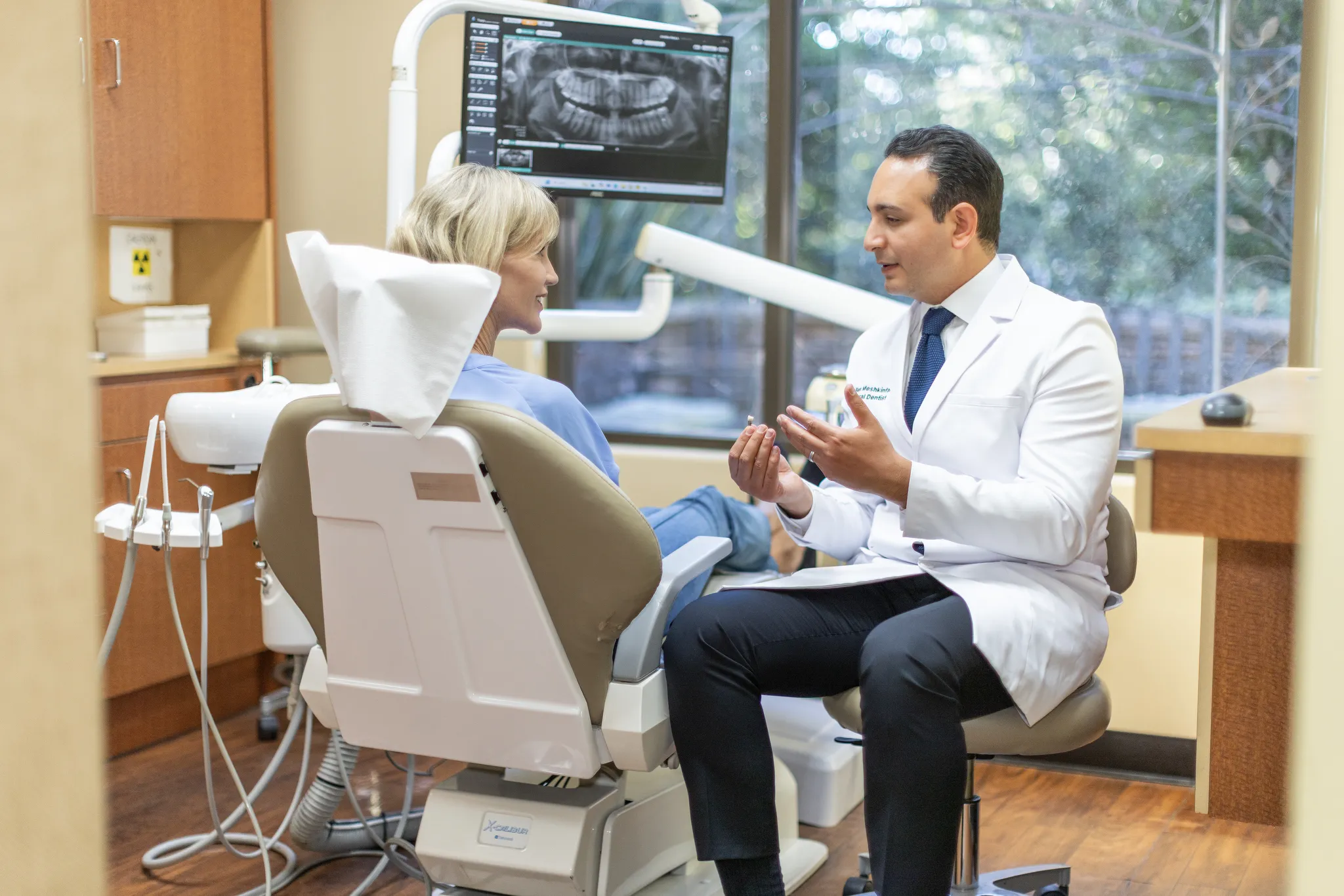
Dentistry for the whole household.
About Implants
How an implant replaces a missing tooth
Implants mimic the structure of a natural tooth by anchoring into the jawbone, which is what makes them stable enough to chew on. Where bone has been lost, grafting can build up the site first so there is enough to anchor into. The result is a replacement that is fixed in place and cared for like the teeth around it.
The Process
The stages of implant treatment
Implant treatment runs over months rather than weeks, because the healing between stages is what makes it hold.
- Assessment and planning Your oral health is evaluated and X-rays used to plan the placement.
- Implant placement The implant is placed into the jawbone, where it acts as an artificial tooth root.
- Osseointegration Over several months the implant fuses with the bone, which is what gives it its stability.
- Abutment placement Once fused, a connector is attached to the implant.
- The replacement tooth A custom crown, bridge or denture is secured to the abutment.
Why Implants
What an implant offers over the alternatives
The difference patients notice is that nothing has to come out at night and nothing moves while eating.
- Anchored in bone It is fixed into the jaw rather than resting on the gum or clipping to other teeth.
- Natural structure It mimics the way a real tooth is rooted, rather than sitting on top of the ridge.
- Stable when chewing Because it is anchored, it handles eating the way a natural tooth does.
- Cared for normally You brush and floss around it as you would any other tooth.
Bone Grafting
When the jaw needs building up first
Bone is lost after a tooth has been missing for a while, and an implant needs enough of it to anchor into. Grafting strengthens the site before placement. Whether you need it is something the assessment and X-rays establish at the start, not a surprise partway through – and if you do, we will explain what it adds to the timeline before anything is agreed.
Getting Started
Booking an implant consultation
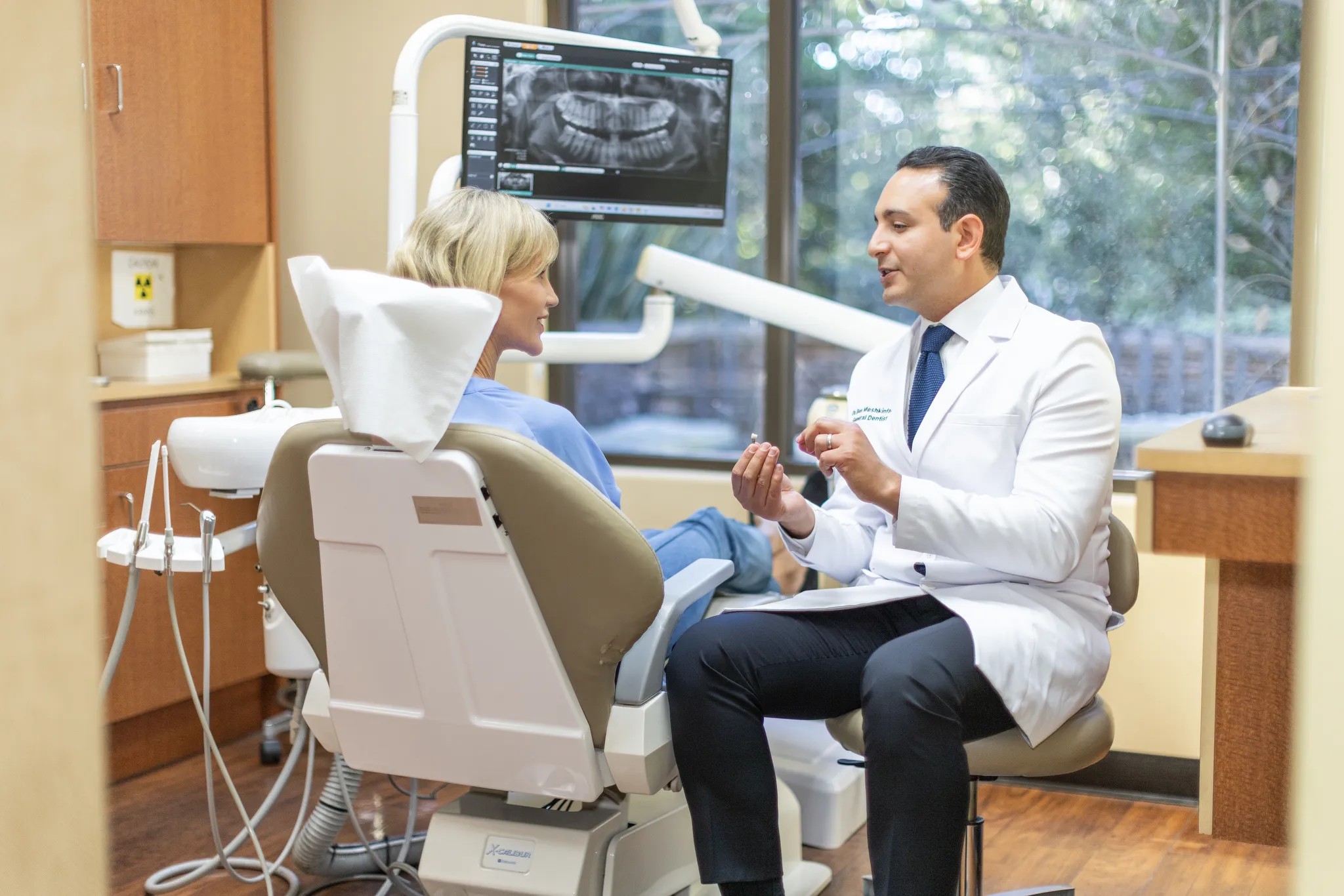
Implant treatment begins with an assessment rather than a quotation. We look at the site, take the images needed to plan it, and set out what the stages would be for your own mouth. Talega Dental Group has treated families in San Clemente since 2003.
The short answer
A dental implant is a post placed into the jawbone that replaces the root of a missing tooth. Over several months it fuses with the bone, and a custom crown, bridge or denture is then attached to it through a connector called an abutment. Because it is anchored in bone rather than resting on the gum, it stays fixed in place and is brushed and flossed like a natural tooth.
Common Questions
Dental Implant FAQ
- How long does implant treatment take?
Implant treatment runs over several months rather than weeks. After the implant is placed, the jawbone needs time to fuse with it, a process called osseointegration, before the connector and the replacement tooth can go on. If bone grafting is needed first, that adds a healing stage at the start. The assessment sets out the stages for your own case before anything is agreed.
- What is osseointegration?
Osseointegration is the process by which a dental implant fuses with the jawbone. It happens over several months after the implant is placed, and it is what lets the implant act as an artificial tooth root. That bond with the bone is what makes an implant stable enough to chew on, which is why the replacement tooth is only attached once it is complete.
- What if I have lost bone in my jaw?
Bone grafting can strengthen the jawbone where loss has occurred, so there is enough to anchor the implant into. Bone is lost after a tooth has been missing for a while, and grafting builds up the site before the implant is placed. Whether you need it is something the assessment and X-rays establish at the start, and if you do, we explain what it adds to the timeline before anything is agreed.
- What goes on top of the implant?
A custom-made crown, bridge or denture goes on top of the implant. It is attached through a connector called an abutment, which is fitted once the implant has fused with the bone. Because the replacement is secured to the implant rather than resting on the gum, it is fixed in place instead of removable.
- Is an implant cared for differently?
No. You brush and floss around an implant as you would a natural tooth, and it is checked at your regular appointments. Because it is fixed in the jaw, there is nothing to take out at night and nothing that moves while you eat.
- Can implants replace more than one tooth?
Yes. Implants can support a single crown, a bridge or a denture, depending on how many teeth are missing and where. A bridge or denture anchored on implants is fixed in place rather than resting on the gum or clipping to other teeth. The assessment and X-rays are used to plan the placement for your own case.
Book a visit
Plan your visit
We accept new patients and offer walk-in emergency care.
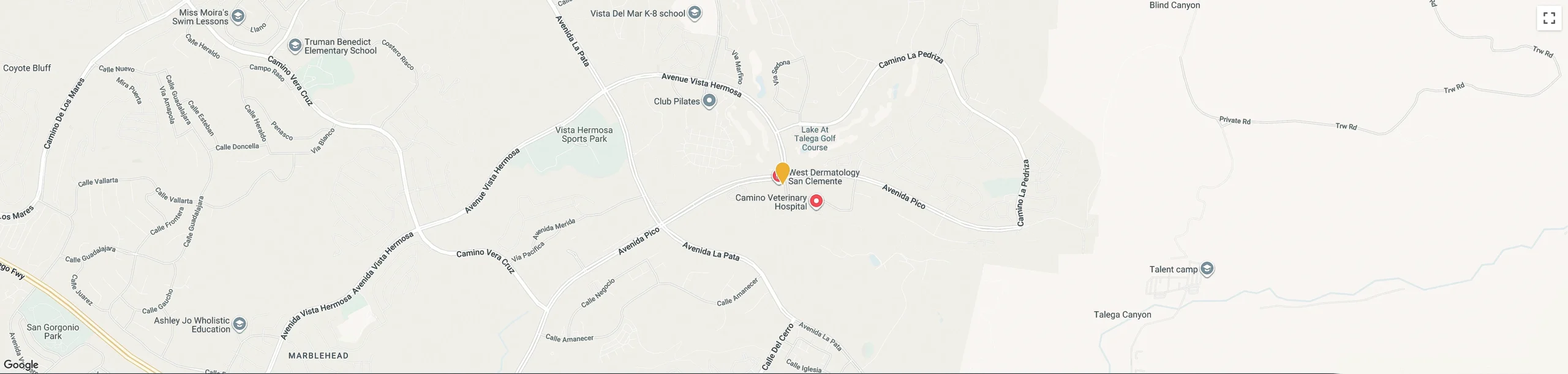
Address
Phone
Office hours
Your dentist

Dr. Ben Meshkinfam, D.D.S.
University of the Pacific, D.D.S. · Post-doctorate at LAC+USC Medical Center
Insurance & financing
30 HMO and PPO plans accepted
Including Delta Dental, Cigna, UnitedHealthcare, Aetna, Guardian, MetLife and Humana. Estimates in writing before treatment.