Surgical Dentistry
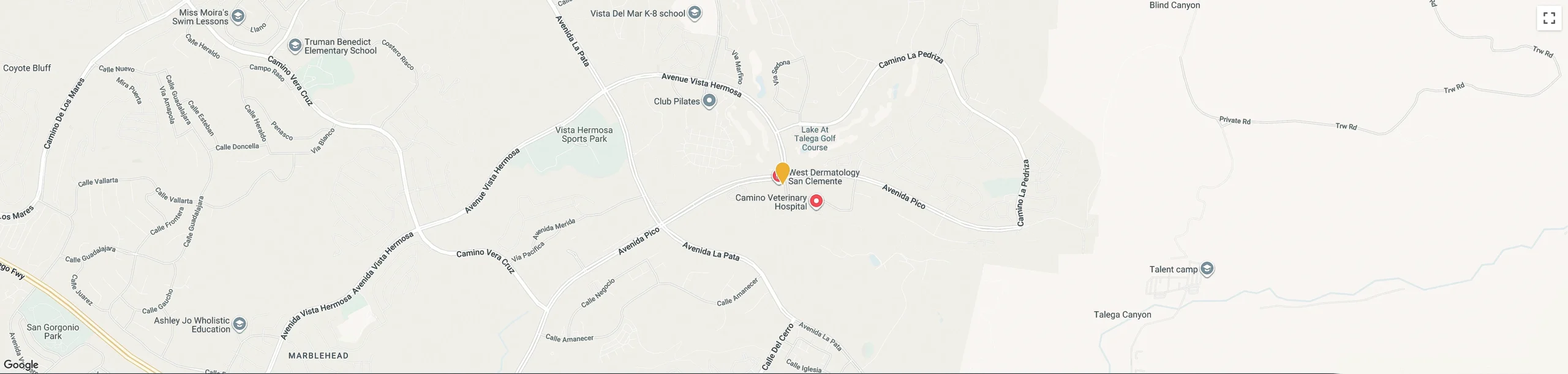
Bone Grafting in San Clemente
Rebuilding the jaw so there is something for an implant to anchor into.
Bone is lost once a tooth has been gone a while, and an implant needs enough of it to hold. A graft reconstructs the jaw and supports the surrounding tissue – a minor surgical procedure, carried out here in the office.
Dentistry for the whole household.
About Bone Grafting
A routine procedure with an old reputation
Grafts were once harvested from elsewhere in the body, the ribs among them, which is where the procedure gets its reputation. Modern dental bone grafting is far simpler and is comfortably performed in a dental office. Bovine bone is often used, because the body reads it as natural bone and it encourages new tissue to form in the jaw.
The Materials
Types of bone graft
Each type has its own advantages, and the choice depends on your own situation.
- Autografts Your own bone, typically from the hip or chin. Often considered the gold standard, with the lowest risk of rejection.
- Allografts Donor bone from a bone bank, thoroughly processed and sterilized.
- Xenografts Bone from another species, most commonly bovine, which the body reads as natural bone.
- Alloplasts Synthetic materials such as biocompatible ceramics, for patients who prefer neither human nor animal bone.
The Procedure
How a graft is carried out
The whole sequence, from the first assessment through to the follow-up visits.
- Consultation and evaluation Your dental health and the condition of the jawbone are assessed to confirm a graft is needed.
- Pre-surgical preparation X-rays or CT scans are taken so the graft placement can be planned accurately.
- The procedure A small incision gives access to the bone, and the graft material is placed at the target site.
- Anesthesia Local anesthetic is administered, with sedation if that is appropriate for you.
- Recovery Detailed post-operative instructions, and follow-up visits to monitor how it is healing.
Why It Matters
What grafting makes possible
For most patients a graft is not the goal – it is what makes the treatment they actually want achievable. Where bone loss would otherwise rule out an implant, grafting creates the foundation for one. Whether you need it is established at the assessment stage with imaging, before an implant plan is finalized, so it is not a surprise partway through.
Getting Started
Finding out whether you need a graft
It is a question answered by imaging rather than by examination alone. Talega Dental Group has treated families in San Clemente since 2003, and the team is happy to answer questions about this or any other procedure before you commit to anything.
The short answer
Dental bone grafting is a minor surgical procedure that rebuilds the jawbone where bone has been lost, so there is enough bone for a dental implant to anchor into. Graft material, which may be your own bone, processed donor bone, bovine bone or a synthetic material, is placed at the site through a small incision under local anesthetic. It is carried out in the dental office and is planned in advance with X-rays or CT scans.
Common Questions
Bone Grafting FAQ
- Why would I need a bone graft?
You may need a bone graft because bone is lost after a tooth has been missing for a time, and an implant needs enough bone to anchor into. A graft rebuilds the site and supports the surrounding tissue. Where bone loss would otherwise rule out an implant, grafting creates the foundation for one.
- Is the bone taken from my own body?
Not usually. Grafts were once harvested from elsewhere in the body, which is where the procedure gets its reputation, but modern grafts commonly use processed donor bone, bovine bone or synthetic materials. Your own bone, typically from the hip or chin, is still an option and carries the lowest risk of rejection. All of these are performed comfortably in the dental office, and the choice depends on your own situation.
- Is bovine bone safe?
Bovine bone is widely used because the body perceives it as natural bone. That helps stimulate new tissue growth in the jaw, which is the purpose of the graft. It is one of several graft materials, alongside your own bone, donor bone and synthetic options, and the choice depends on your own situation.
- Is it painful?
Local anesthetic is used to numb the area, with sedation where that is appropriate for you. After the procedure you are given detailed post-operative instructions to support healing. Follow-up visits are then used to monitor how the site is healing.
- How is it planned?
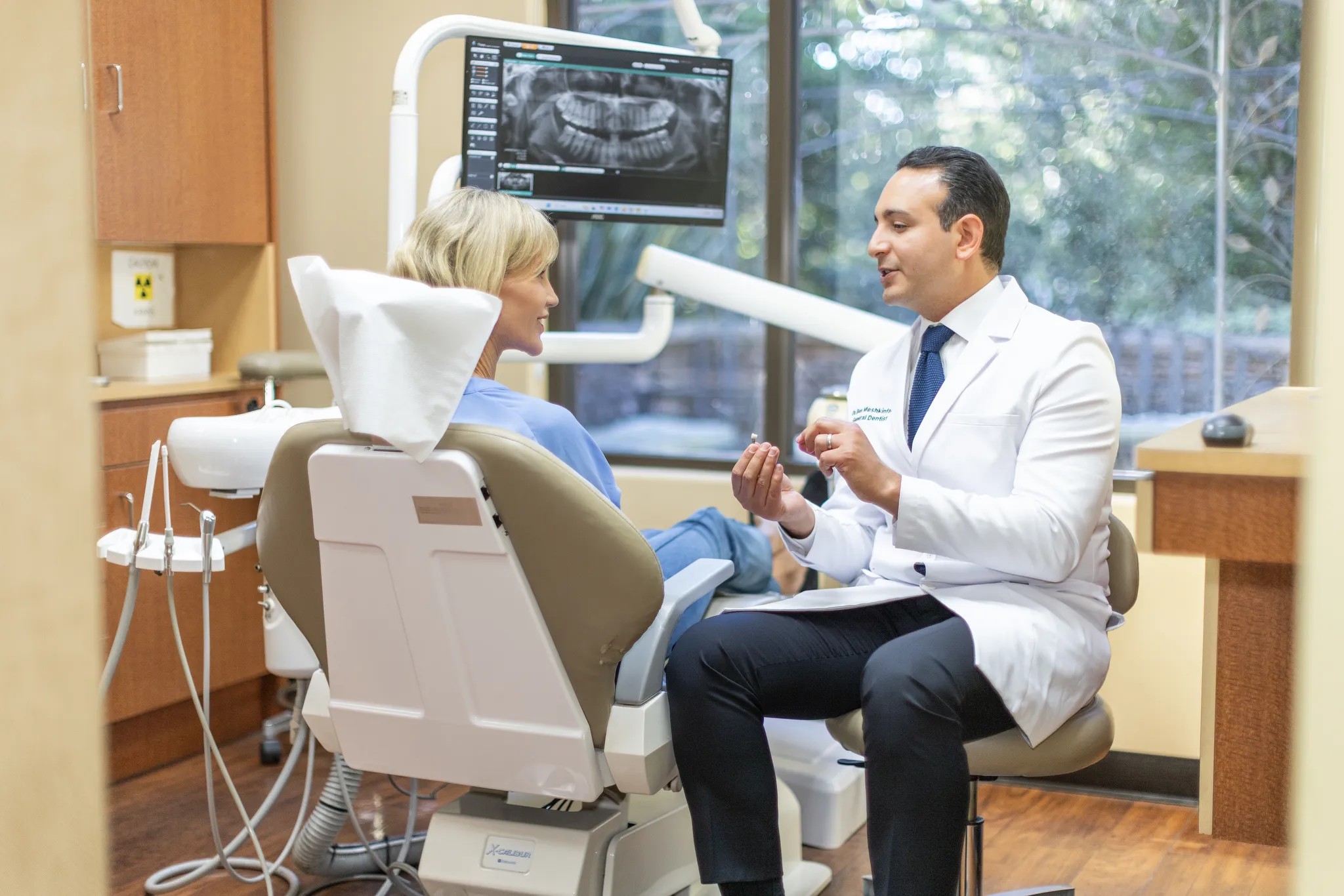
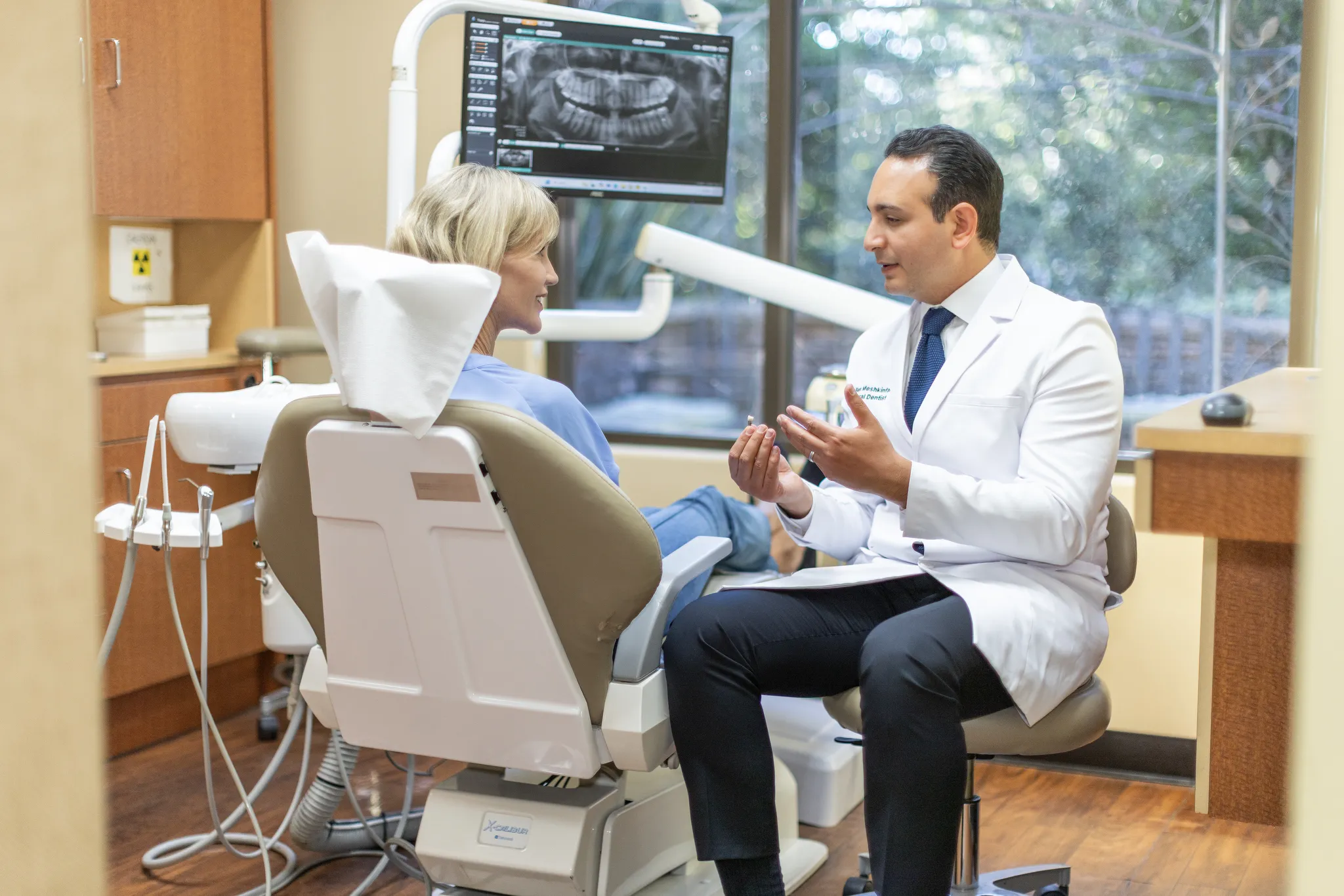
A bone graft is planned with X-rays or CT scans taken before the procedure, so the graft placement can be planned accurately. Your dental health and the condition of the jawbone are assessed first to confirm a graft is needed. The imaging then shows where the graft material should go.
- How will I know if I need one?
The assessment of your jawbone condition at the consultation stage establishes whether you need a graft, before an implant plan is finalized. It is a question answered by imaging rather than by examination alone. Because it is settled at the start, a graft is not a surprise partway through treatment.
Book a visit
Plan your visit
We accept new patients and offer walk-in emergency care.
Address
Phone
Office hours
Your dentist
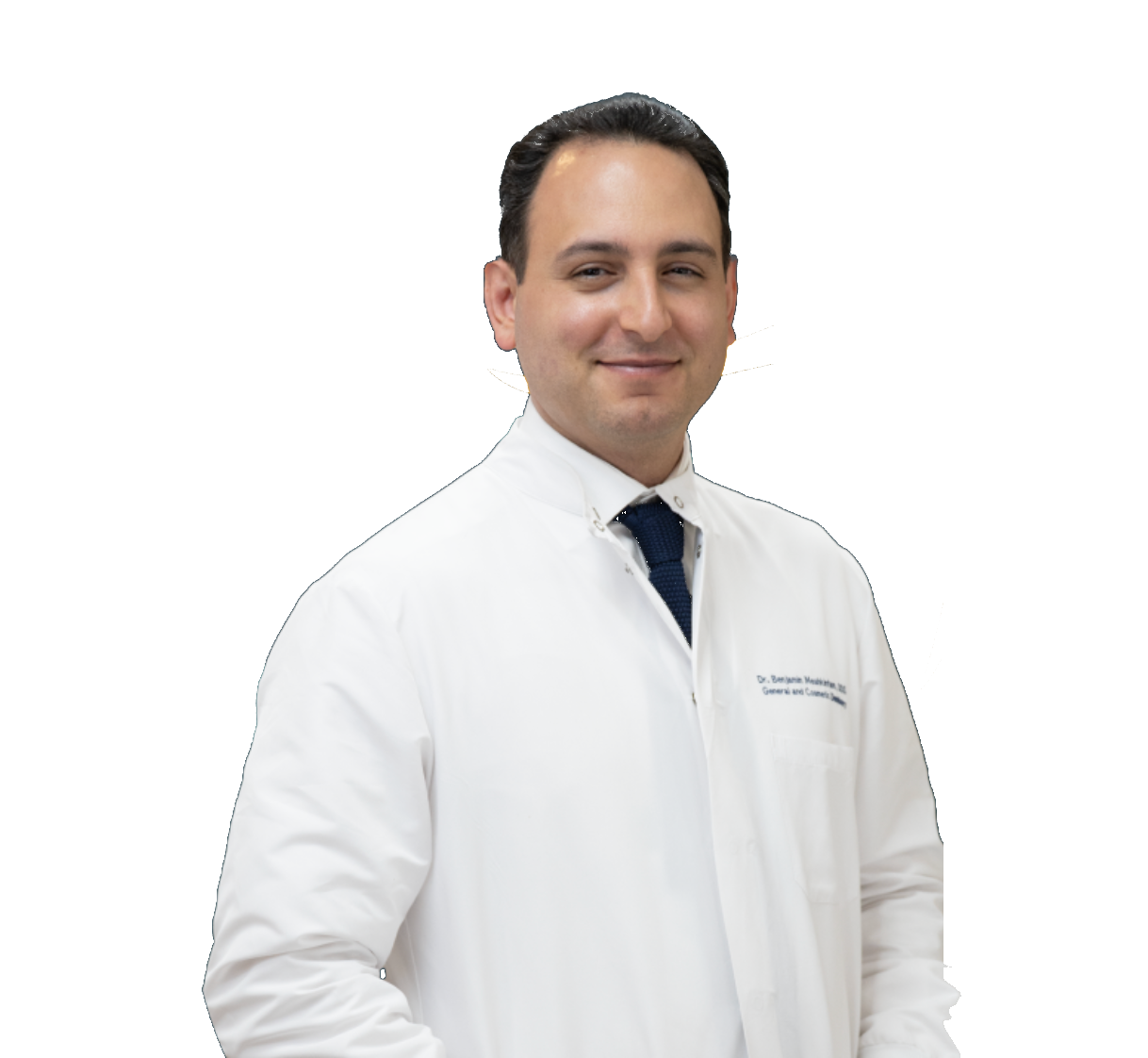
Dr. Ben Meshkinfam, D.D.S.
University of the Pacific, D.D.S. · Post-doctorate at LAC+USC Medical Center
Insurance & financing
30 HMO and PPO plans accepted
Including Delta Dental, Cigna, UnitedHealthcare, Aetna, Guardian, MetLife and Humana. Estimates in writing before treatment.